

In this guide
Why this guide matters
French Bulldogs have topped the US’s most-registered-breed list for four years running, and they’re just as in demand here in the UAE. They’re also one of the most medically fragile breeds you can bring home, and Gulf summers raise the stakes. That’s not a reason to skip the breed, it’s a reason to go in prepared.
Here’s what matters most for French Bulldog owners in the UAE: the heat risk, the health issues that go beyond breathing, the legal paperwork, and what your first year will actually cost. Let’s get into it.
Frenchie at a glance
| Weight | 7 to 13 kg (16 to 28 lbs) |
| Height | 28 to 33 cm (11 to 13 in) |
| Lifespan | 10 to 12 years |
| Coat | Short, smooth, low shed |
| Energy level | Low to moderate |
| Good with kids | Yes, with supervision |
| Apartment friendly | Yes |
| Heat tolerance | Low, needs AC and shade |
| Grooming | Easy coat; high attention to folds, ears and airway |
Source: AKC French Bulldog breed profile
The short version
- Frenchies are affectionate and apartment friendly, but many struggle with being left alone. Alone time needs to be trained, not assumed.
- Their flat faces make them genuinely heat vulnerable, not just “a bit sensitive.” UAE summers demand real planning.
- Breathing gets the attention, but skin, spine, eyes and teeth need watching too.
- The coat is low effort. Everything else about their health is not.
- Exercise and food both need to be measured, not improvised.
- Frenchies are legal in the UAE, but import and registration paperwork is non-negotiable.
- The purchase price is the smallest number you’ll spend on this dog. Budget for the rest.
1. Frenchies Bond Hard and It’s Sweet Until It Isn’t

The typical French Bulldog is affectionate, playful and thoroughly people-focused. Most settle well into apartment life: they’re small, they don’t need a garden, and they’re not built for hours of strenuous exercise. A short game, a gentle walk and a prime spot next to you is usually enough.
Here’s the catch: that attachment cuts both ways. Left alone for long stretches, some Frenchies struggle hard. Barking, chewing, indoor accidents or pacing can all show up if a puppy never learned how to be by itself.
PRO TIP
Start with short absences and build up gradually. Give the dog a predictable routine, and if you work long hours, look into a dog walker, sitter or suitable daycare before separation issues become a habit.
Training matters too. Frenchies are smart, but they can get stubborn when a lesson feels repetitive. Short sessions, food rewards and calm consistency beat punishment every time. Start toilet training and socialisation early, and introduce your puppy carefully to lifts, traffic noise, visitors, grooming and other vaccinated dogs.
And if you’ve got kids at home: supervise their time with the dog, as you would with any breed. Teach them not to disturb a sleeping or eating dog, and give your Frenchie somewhere quiet to retreat to.
2. The UAE Heat Isn’t Just Uncomfortable. It Can Be Dangerous
A French Bulldog has a short skull and a compressed upper airway, a body shape known as brachycephaly. Narrow nostrils, an elongated soft palate and other airway changes can make it genuinely difficult for some dogs to move air efficiently. A Royal Veterinary College VetCompass study of 2,781 Frenchies found they’re 42 times more likely to have narrowed nostrils and 30 times more likely to have obstructive airway syndrome than other dogs.
Why does that matter in the heat? Panting is how dogs release most of their body heat, and a compromised airway makes that cooling system a lot less effective. A related RVC and Nottingham Trent University study put French Bulldogs at roughly six times the heatstroke risk of a Labrador Retriever, one of the highest multipliers of any breed studied.
For a French Bulldog in the UAE, summer walks need actual planning, not guesswork:
- Walk during the coolest parts of the day: early morning or after sunset in peak summer.
- Keep walks short and stick to shaded routes.
- Do the 7-second test: press the back of your hand to the pavement. If you can’t comfortably hold it there for seven seconds, it’s too hot for paws.
- Swap outdoor time for indoor play, sniffing games or food puzzles on harsh weather days.
- Keep fresh water available at all times, and make sure your dog always has an air-conditioned space to return to.
- Use a well-fitted harness instead of a collar, which puts extra pressure on an already compromised airway.
- Never leave your dog in a parked car, on a balcony or in an uncooled room. A dog that’s still walking isn’t necessarily coping.
WATCH FOR
Heavy panting, thick drool, noisy or laboured breathing, weakness, vomiting, confusion or collapse. Move your dog to a cool area, wet the body with cool water, but not ice cold water, get airflow going and call a vet while you travel to the clinic. Skip wet towels and ice water because both can make things worse.
TopVet’s Dubai heatstroke guide walks through the warning signs and first-aid steps in more detail. Bookmark it before you need it.
3. Breathing Gets the Headlines, But It’s Not the Only Health Story
Breathing gets most of the attention with French Bulldogs, but skin-fold infections, allergies, ear disease, eye injuries, dental crowding and spinal problems show up just as often. Extra weight makes all of it worse: breathing, joints and heat tolerance included.
If you’re looking at a French Bulldog puppy, watch how it breathes while awake and at rest. Constant snorting, gagging, open-mouth breathing, disturbed sleep or poor exercise tolerance shouldn’t be waved off as “just how the breed is.” A puppy with very tight nostrils, an extremely flat face or a heavy body may face more trouble down the line.
Don’t overlook the spine
Frenchies have a chondrodystrophic body type, which affects how cartilage and bone develop and raises the risk of intervertebral disc herniation. Watch for sudden back or neck pain, reluctance to jump, a hunched posture, weakness, dragging paws or a wobbly gait. Loss of movement or bladder control is an emergency. Don’t wait it out.
A 2026 review discussed by the Parsemus Foundation looked at records from 2,101 Frenchies and found an association between gonadectomy and intervertebral disc herniation, with the pattern differing by sex and age at surgery. The research was retrospective, so it can’t prove that spaying or neutering caused the condition. What it does support is having an individual conversation with your vet rather than defaulting to a one-size-fits-all timing rule.
Ask your vet to weigh reproductive health, behaviour, sex, age and spinal risk before scheduling surgery. TopVet’s spay and neuter service includes a pre-operative assessment and recovery plan, which gives you a proper chance to talk through those trade-offs.
Routine pet wellness exams can track weight, breathing, skin, ears, teeth and movement before a small concern turns into a bigger one. Book sooner if your dog snores heavily while awake, faints, tires after minimal activity, or keeps getting skin or ear infections.
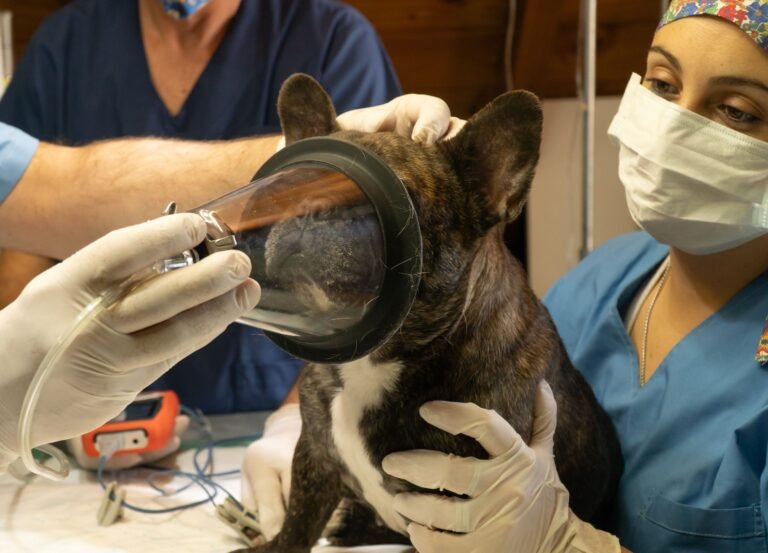
Already have a Frenchie?
A baseline exam can check breathing, weight, skin, ears, teeth and movement-before UAE summer adds extra strain.
4. Low-Maintenance Coat, High-Maintenance Everything Else
The short coat of a French Bulldog is genuinely easy to look after. Most dogs don’t need elaborate trimming, and a weekly brush is usually enough to keep loose hair under control. It’s everything else that needs real attention: nails, ears, teeth, facial folds and the “pocket” under the tail often need more care than the coat itself.
Clean your Frenchie’s skin folds only as your vet advises, then dry them thoroughly. Moisture trapped in a fold is basically an invitation for irritation, yeast and bacteria. Redness, smell, discharge, rubbing or obvious soreness means it’s time for an exam. Reaching for another fragranced wipe just masks the smell without fixing what’s causing it.
Dental care should start in puppyhood: use dog-safe toothpaste and build up gradually from touching the lips to brushing the outer tooth surfaces. Check ears weekly, but never push a cotton bud into the canal. Professional pet grooming in Dubai can help with bathing, nails, ears and shedding, especially when skin sensitivities mean products need to be chosen carefully.
So, are Frenchies actually high maintenance? The coat says no. Everything else says yes: budget the time for health monitoring, and the money for vet costs that can run higher than a less extreme breed.
5. Exercise and Food Need a Plan, Not Guesswork
A healthy adult French Bulldog still needs daily activity. Skip it, and weight gain and boredom creep in fast. The safest routine usually mixes several short walks with indoor play and training. Puppies need shorter sessions since their bodies are still developing, and forced running, long hikes, repeated stair climbing and jumping off furniture are all best avoided.
Let breathing and recovery set the pace. A dog should settle down soon after gentle activity. If the tongue turns very dark red or blue, breathing sounds harsher than usual, or your dog just can’t seem to recover, stop and get help. In summer, move exercise indoors well before you see any of those signs.
A French Bulldog feeding plan deserves the same level of care. Measure meals, factor in treats, and judge body condition rather than trusting the number on the scale alone. You should be able to feel the ribs under a light layer of tissue and see a waist from above. Sudden weight change, frequent vomiting, diarrhoea, excessive wind or itchy skin all warrant a vet visit.
Choose a complete food made for your dog’s life stage. A French Bulldog puppy needs a growth diet with the right meal frequency; an adult may need fewer calories than the feeding guide suggests if activity is limited. Resist the urge to switch foods every time your dog has one off day. A vet can tell you whether it’s portion size, treats, parasites, an allergy, or something else entirely.
6. Yes, They’re Legal in the UAE, But There’s Real Paperwork
Good news first: a French Bulldog is allowed in the UAE. The breed isn’t on the current prohibited-import list published by the Ministry of Climate Change and Environment (MOCCAE). Just don’t confuse it with the French Mastiff, also known as the Dogue de Bordeaux, which is on the prohibited list.
Planning a French Bulldog import from abroad? Check the current MOCCAE pet-import requirements before you book the flight. As of August 2026, the ministry requires an advance import permit, a permanent microchip, a certified veterinary health certificate and vaccination records. Rabies and other specified canine vaccinations must meet the stated timing rules, and dogs arriving from higher-risk countries may also need a rabies antibody-titre test. Import conditions change, so treat the ministry page as your final checklist rather than an old relocation blog post.
Once your dog is here, complete the registration required by your municipality and keep vaccinations current. Your emirate, property manager, airline and community may each have their own rules about pets, shared areas and transport. Confirm your building actually permits dogs before you pay a deposit or buy a puppy.
Microchipping helps reunite a lost dog with its owner and is part of the paperwork used for registration and travel. TopVet offers vaccination and microchipping in Dubai, with documentation you’ll need for ongoing care and compliance.

7. The Sticker Price Is Just the Opening Bid
The price of a French Bulldog puppy in Dubai swings sharply. One current Dubai seller advertises a range of AED 3,000 to AED 15,000, with individual puppies priced differently. You can see that spread on its French Bulldog puppy listing. Treat listing prices as examples of the market, not a guarantee of health, pedigree or responsible breeding.
Colour, sex, pedigree, breeder reputation and import costs all move the French Bulldog price in Dubai. Words like “rare,” “mini” or “fluffy” tend to push prices up, but a fashionable coat doesn’t make a healthier dog. Some uncommon colours come from breeding decisions that narrow the gene pool or introduce other problems.
Before you pay a deposit, ask for:
- The puppy’s microchip and vaccination records
- A recent veterinary exam and a written health history
- Health information for both parents, including airway, spine, eye and kneecap assessments where available
- A chance to see the puppy breathing, walking and interacting while awake
- A written contract covering health guarantees and return arrangements
RED FLAGS
A seller who won’t show you where the puppy was raised, won’t share parent information, pushes for an immediate transfer, or offers to hand the puppy over in a car park. A low purchase price now can turn into substantial treatment costs later.
What your first year might actually cost
The purchase price is the number everyone focuses on, but it’s rarely the biggest one over time. Treat these figures as ballpark planning ranges; actual costs depend on the clinic, insurer and your dog’s individual needs.
| Category | Typical first-year range (AED) |
|---|---|
| Puppy purchase | 3,000 to 15,000+ |
| Vaccinations & microchipping | 800 to 1,500 |
| Wellness exams (2 to 3 visits) | 600 to 1,200 |
| Spay/neuter (if advised) | 800 to 2,000 |
| Grooming & fold care | 1,200 to 3,600 |
| Food (life-stage appropriate) | 2,400 to 4,800 |
| Registration & import paperwork | 200 to 500 |
| Pet insurance | 1,500 to 4,000 |
Figures are general planning ranges, not quotes.
Build an emergency fund on top of that. If breathing surgery, allergy care, eye treatment or spinal imaging becomes necessary, costs can climb quickly. Before choosing a policy, ask insurers directly about exclusions for hereditary, congenital and pre-existing conditions. This is exactly where brachycephalic breeds tend to get caught out.
So, is a Frenchie right for your life in the UAE?
A Frenchie could suit you if…
- You want a small, highly social dog.
- You can provide an air-conditioned home.
- You can offer daily company.
- Your budget can flex for veterinary care.
Think twice if…
- You want a running partner.
- You’re out of the house most days.
- You can’t control summer heat exposure.
- Unexpected health costs would derail you.
If you can, meet adult Frenchies as well as puppies. You’ll see exactly what you’re signing up for. And talk to a vet before you commit, especially if you’re not confident assessing breathing or body condition yourself. A little caution up front can save years of avoidable difficulty for both of you.
Frequently asked questions
Is a French Bulldog a good pet?
Yes, for the right owner. A french bulldog can be a great pet if you want an affectionate, playful dog that stays close to the family. Frenchies tend to adapt well to apartment living and don’t need intense exercise, but they still need training, company, heat protection and careful health monitoring.
Are French Bulldogs allowed in the UAE?
Yes. Frenchies are permitted in the UAE and aren’t on MOCCAE’s current prohibited dog-breed list. The French Mastiff is a different, prohibited breed. Importers still need to follow the current permit, microchip, health-certificate and vaccination requirements.
Are Frenchies high-maintenance dogs?
It depends what you mean. Coat care takes a few minutes a week. Everything underneath it, folds, weight, breathing and dental health, needs a more watchful owner than most breeds require.
Why is a Frenchie so expensive?
Demand, small litter sizes, breeding costs, pedigree, import expenses and coat colour all affect price. A high price doesn’t prove responsible breeding. Health screening, transparent parent records and an independent vet check matter far more than colour or marketing labels.
What’s the downside of a French Bulldog?
Mostly the health risk profile. This is a breed where vet bills tend to run higher and start earlier than average, and some dogs also struggle with being left alone or take longer to toilet-train. Go in expecting closer supervision than a hardier breed would need.
How much does a French Bulldog puppy cost in Dubai?
Advertised prices typically range from roughly AED 3,000 to AED 15,000, with some puppies priced outside that range. Age, pedigree, colour, breeder practices, health checks and import costs all play into the number. Compare health evidence and records rather than choosing on price alone.
Give your Frenchie a clear health baseline
A single wellness exam can assess airway, weight, skin and joints, then turn that information into a heat-safe daily routine built for the UAE.
More from TopVet
More practical guides for pet owners living in Dubai and across the UAE.
DOG BUYER’S GUIDE
ROTTWEILER

September 3, 2026
Understand current puppy prices, first-year costs and the breeder checklist to complete before choosing a puppy or paying a deposit.
CAT BREED GUIDE
SIAMESE

August 20, 2026
A practical guide to temperament, companionship, grooming and keeping this highly social cat comfortable in the UAE.
DUBAI PET SAFETY
HEAT STROKE
May 5, 2026
A complete guide to warning signs, immediate first aid and recognising when your pet needs emergency veterinary care.
CAT CARE GUIDE
SHORTHAIR

April 7, 2026
A UAE-specific guide covering respiratory health, grooming, eye & dental care, and heat safety when living with your pet.